Mind Goes Blank Under Pressure? Here's How to Regain Clarity in 90 Seconds
By Manoj Gupta, Founder
Why Your Mind Goes Blank Under Pressure
Have you ever been in an important meeting, answering a difficult question, or facing an unexpected challenge, only to find your mind suddenly going blank?
You know the answer. You have the experience. You've handled similar situations before. Yet, at that very moment, the words don't come, your thinking slows down, and even simple decisions feel difficult.
This is what happens when pressure takes over your ability to think clearly.
Whether you're leading a team, negotiating a deal, speaking to an audience or making a critical decision, the ability to stay composed matters.
But why does this happen, even to experienced leaders? And more importantly, can you regain control of your thinking when it matters most?
To understand that, let's look at what happens inside your brain under pressure.
The Science Behind the Brain Freeze
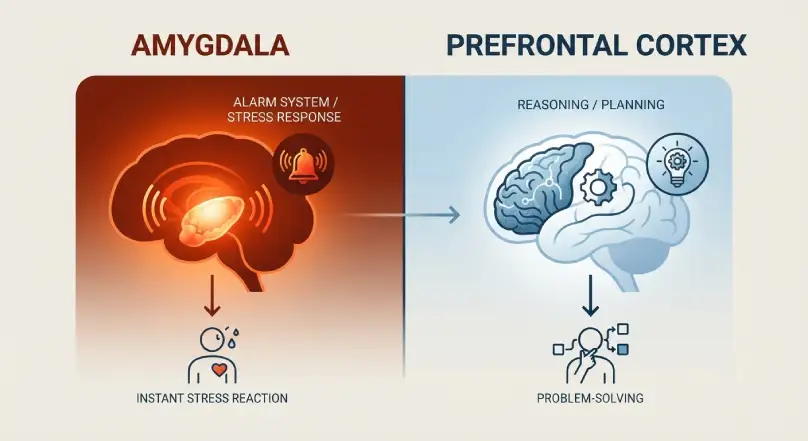
When you experience intense pressure, two important parts of your brain come into play: the amygdala and the prefrontal cortex.
The amygdala acts as your brain's alarm system. It constantly scans for potential threats and triggers a stress response when it senses danger.
The prefrontal cortex, on the other hand, is responsible for reasoning, planning, problem-solving and making considered decisions.
Under high stress, the amygdala can dominate your response. It triggers the release of stress hormones such as adrenaline and cortisol, preparing your body for immediate action.
Your brain starts prioritising survival over complex thinking. That's why recalling information, finding the right words or making a rational decision can suddenly become difficult.
In simple terms, your brain is preparing you to react when what you actually need is the ability to think.
And this is where an interesting connection between modern neuroscience and ancient Vedic wisdom comes in.
Manas vs. Buddhi: The Vedic Perspective
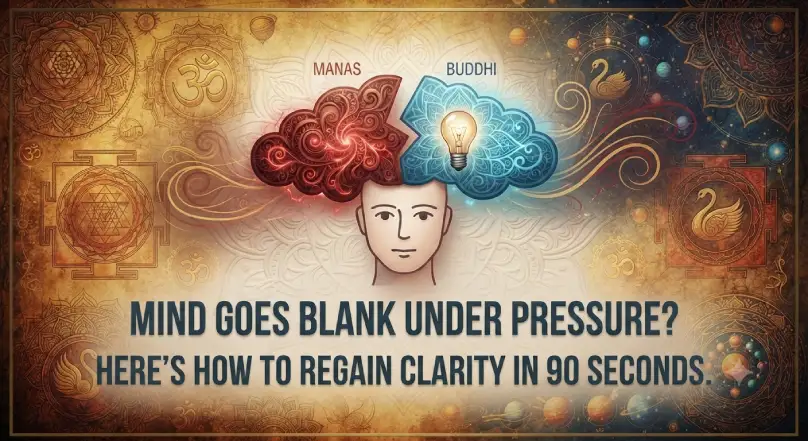
Ancient Vedic wisdom offers an interesting way to understand this conflict through two concepts: Manas and Buddhi.
- Manas is the mind that processes sensory information, desires and emotions. It can become restless, reactive and caught between past experiences and future worries.
- Buddhi represents the intellect - our ability to reason, discriminate and make conscious decisions.
Think of Manas as the part of you that reacts to a stressful situation, while Buddhi is the part that helps you pause, assess what is happening and respond thoughtfully.
When pressure takes over, Manas can become dominant, making it harder to access the clarity of Buddhi.
The Vedic practice of Pratyahara offers an interesting approach here. It involves consciously withdrawing attention from external sensory distractions, allowing the mind to settle rather than fighting every thought.
This brings us to a practical question: Can you use these principles in the middle of a high-pressure situation?
Manoj Gupta explores exactly that through a simple 90-second executive playbook.
The 90-Second Executive Playbook
Regaining clarity under pressure doesn't always require a long break or complicated technique. Manoj Gupta introduces a simple three-step approach to help you pause, settle your mind and return to clear thinking.
Step 1: The Physiological Brake
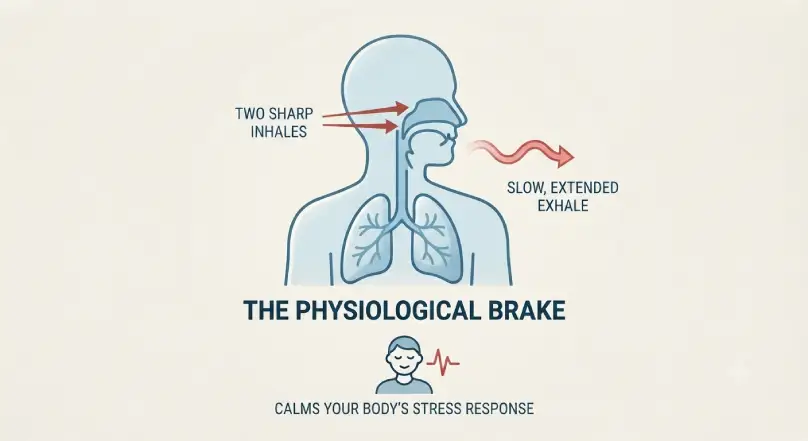
Take two sharp inhales through your nose, followed by a slow, extended exhale through your mouth. This breathing technique helps calm your body's stress response.
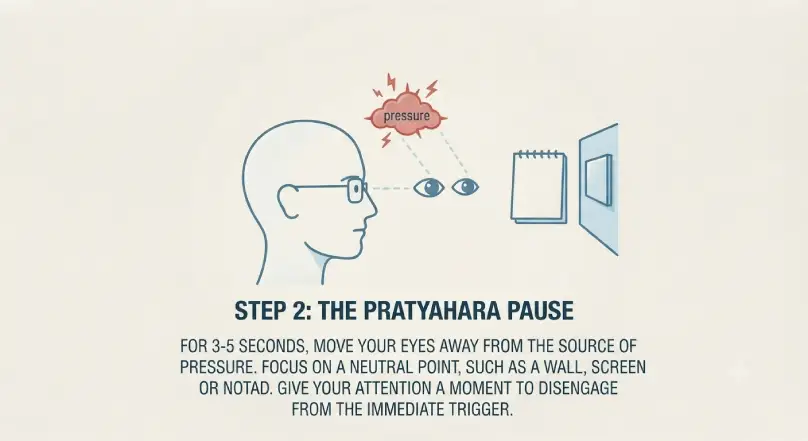
Step 2: The Pratyahara Pause
For 3-5 seconds, move your eyes away from the source of pressure. Focus on a neutral point, such as a wall, screen or notepad. Give your attention a moment to disengage from the immediate trigger.
Step 3: Shift from Manas to Buddhi
Ask yourself one question:
“What is that one single fact which I can recall at this point in time, separate from my current emotion?”
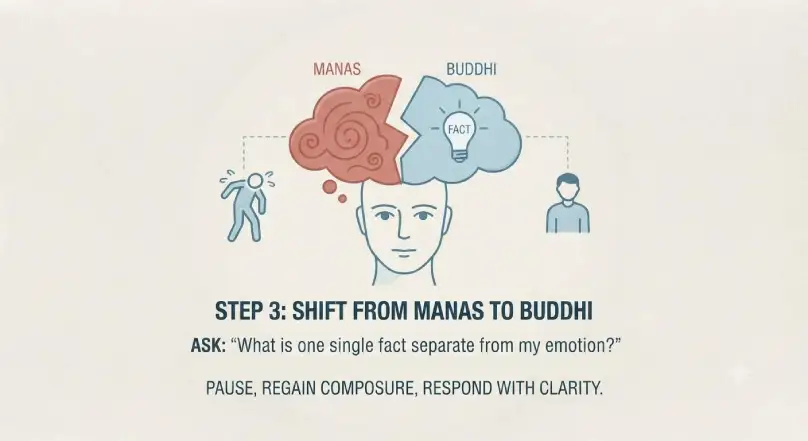
This shifts your attention away from emotional reactions and towards facts, helping you approach the situation more objectively.
The idea is simple: pause, regain composure and then respond with clarity.
Watch Manoj Gupta Explain the Technique
Knowing how pressure affects your thinking is one thing. Learning how to respond differently when it happens is another.
In this episode, Manoj Gupta brings together modern neuroscience and ancient Vedic wisdom to explain why the mind freezes under pressure and how you can regain clarity in 90 seconds.
Watch the full episode to understand the technique and learn how to apply it when your next high-pressure moment arrives.
Frequently Asked Questions
Why does my mind go blank during stressful situations?
Under intense pressure, the brain's threat-response system can interfere with the prefrontal cortex, making it harder to think clearly, recall information and make decisions.
How can I regain mental clarity under pressure?
A simple approach is to regulate your breathing, briefly shift your attention away from the source of stress, and focus on one objective fact before responding.
What is the difference between Manas and Buddhi?
In Vedic philosophy, Manas is associated with sensory processing, thoughts and emotions, while Buddhi represents intellect, discernment and the ability to make considered decisions.
What is Pratyahara and how does it help during stress?
Pratyahara is a yogic practice of withdrawing attention from external sensory inputs. It can help create a pause between an external trigger and your response.
Can the 90-second technique help leaders make better decisions?
It can offer leaders a practical way to pause, manage immediate stress and refocus on facts before making decisions in challenging situations.
Set the Trajectory
There are no reflections on this insight yet. Be the first to initiate the dialogue and share your perspective with the community.


Did this insight shift your perspective?
If this article resonated with you, what is one change or practice you will introduce to your workflow or leadership style moving forward? Share your commitment below.